.png)



Eligibility Criteria
- Must be a FounderPass Premium member
- Early stage startup (typically pre-seed to Series A)
- New Framer Pro subscription
- Apply through the FounderPass partner application
Final eligibility and approval are determined by Framer.
Steps to redeem this offer
- Log in to your FounderPass Premium account.
- Open the Framer offer page.
- Click through to the Framer startup application form.
- Submit company and website details.
- If approved, Framer Pro is activated free for 12 months.
What you get in this deal
- Framer Pro plan free for 12 months (worth $360)
- Full visual site builder and CMS
- Hosting and one click publishing
- Templates and design system
- Analytics and localisation features
- Ability to design and update pages without developers
About Framer
Framer is a visual website builder built specifically for modern startup sites. It sits somewhere between Webflow and traditional no code tools, with a strong focus on design quality, speed, and ease of publishing. Founders can design pages visually, manage content through a CMS, and publish instantly without touching code or relying on developers.
For early stage startups, the website is rarely a one time project. Messaging changes, positioning evolves, and landing pages need constant iteration. Framer is designed for exactly that reality. Instead of waiting on designers or engineers, founders and marketers can make edits themselves and push updates live immediately. This keeps the website aligned with the business as it learns and grows. It is worth noting that teams wanting very complex backend logic, heavy custom integrations, or full product interfaces will still rely on engineering frameworks alongside Framer rather than replacing them.
Why founders use Framer
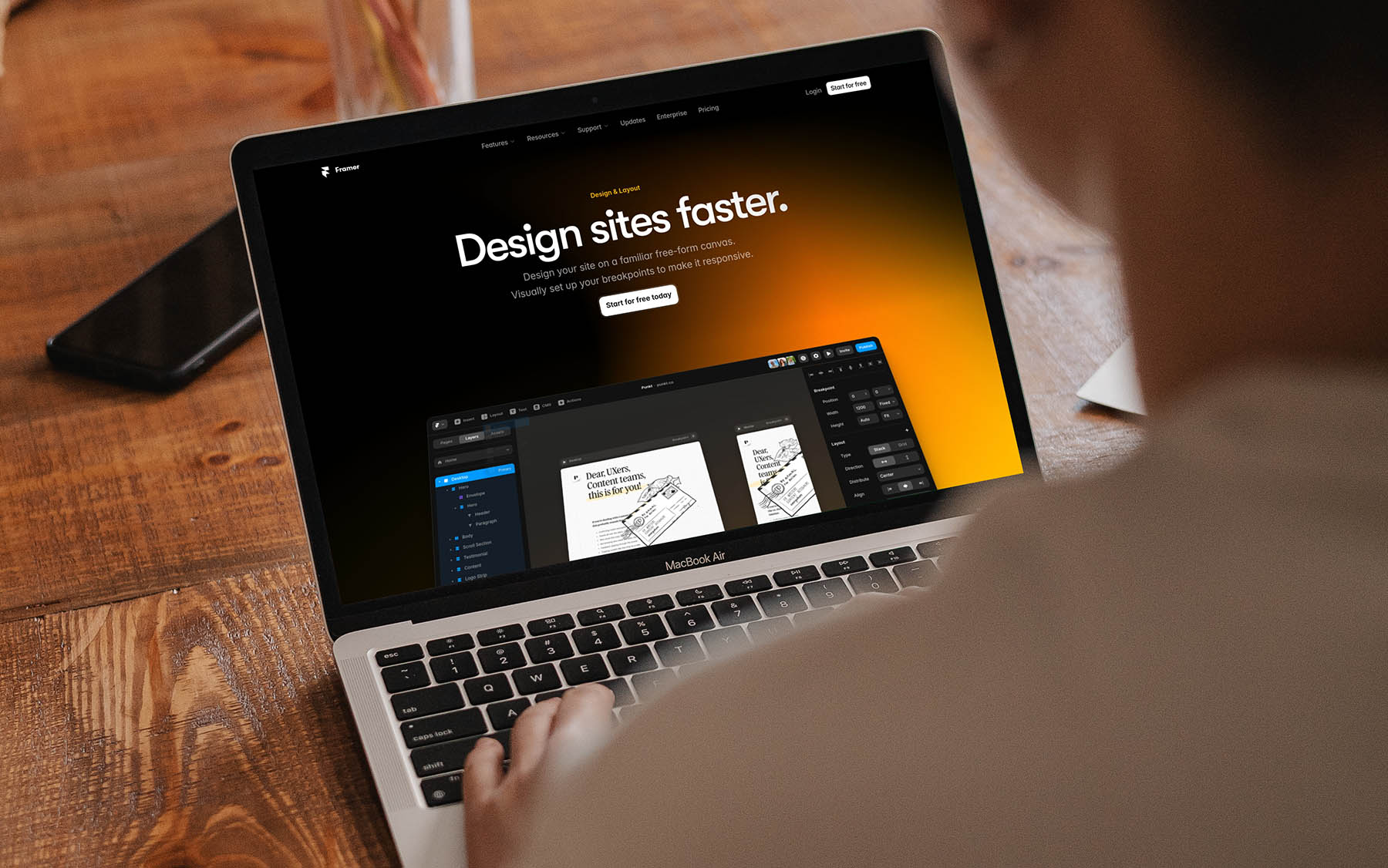
The biggest reason founders choose Framer is speed without sacrificing design. You can create a site that looks agency level without hiring an agency. Templates provide a strong starting point, while the visual editor allows full layout control. For startups launching quickly or testing positioning, that balance is extremely valuable.
Another major advantage is ownership. Many founders build a site once, then struggle to update it because the tooling is too technical or the developer is no longer available. Framer keeps control inside the team. Marketing pages, product pages, and landing pages can all be updated in minutes. The trade off is that advanced customisation beyond what the visual system supports can require workarounds or code embeds, which some highly technical teams may find limiting compared to fully coded stacks.
How startups typically use Framer
In practice, we see FounderPass members use Framer for:
- Launching their first public website or MVP landing page
- Iterating messaging after early customer feedback
- Creating campaign or feature landing pages quickly
- Managing blog or content sections via the CMS
- Rebranding or redesigning without full rebuilds
One FounderPass member, a pre-seed SaaS founder, rebuilt their marketing site in Framer after struggling to maintain a custom coded site. They moved from developer dependent updates to self managed content, launched new pages for investor outreach and beta users, and cut ongoing web costs entirely. The main benefit they reported was agility. They could test messaging changes the same day rather than waiting weeks. They did note that recreating a few highly bespoke interactive elements required simplifying the original design, which is typical when moving from fully custom code to a visual builder.
Of course, it might not be for everyone, you can still use Framer for your needs in most cases, alternatively you could check out our Webflow promo code for a different but similar option.
Where Framer fits long term
Framer scales well for most startup marketing needs. It supports CMS content, localisation, analytics integrations, and performance optimisation. Many companies keep Framer through Series A and beyond for marketing sites, especially when marketing teams want independence from engineering resources.
That said, it is still primarily a marketing website platform rather than a product web app framework. Founders building highly dynamic product frontends, complex dashboards, or application logic will continue using engineering stacks separately. Framer’s role is making the public facing site fast, flexible, and easy to manage without developer dependency.
The best Framer alternatives
For those who find that Framer isn't quite right or maybe you've already used it and want to try something different, below are the nearest alternatives available with deals.

FAQs
What does the Framer Pro plan include?
Framer Pro includes the full visual site builder, CMS, hosting, publishing and advanced site features such as localisation and analytics integrations. It is designed for professional marketing sites rather than simple landing pages.
Do I need design or coding skills to use Framer?
No coding is required. The editor is visual and layout based, similar to modern design tools, many founders build and manage sites themselves after a short learning curve.
Can Framer replace Webflow or WordPress?
For most startup marketing sites, yes. Framer covers design, CMS and hosting in one platform. Companies needing complex plugins or heavy backend logic may still use WordPress or custom stacks, but many startups migrate from them to simplify maintenance.
What happens after the free year ends?
After 12 months, the subscription renews at standard Framer Pro pricing unless changed or cancelled. You keep the site and content as normal.
Is Framer suitable for scaling startups?
Yes. Framer supports multi page sites, CMS content, localisation, and integrations. Many companies continue using it through growth stages for marketing websites.
Can I migrate an existing site to Framer?
Yes. Most marketing sites can be recreated or migrated into Framer. Some startups use the free year to redesign or replatform from older builders or custom code.

Deal change log
- February 13th, 2026 - Deal changed from 3 months free to 1 year free