.png)




Quick Summary:
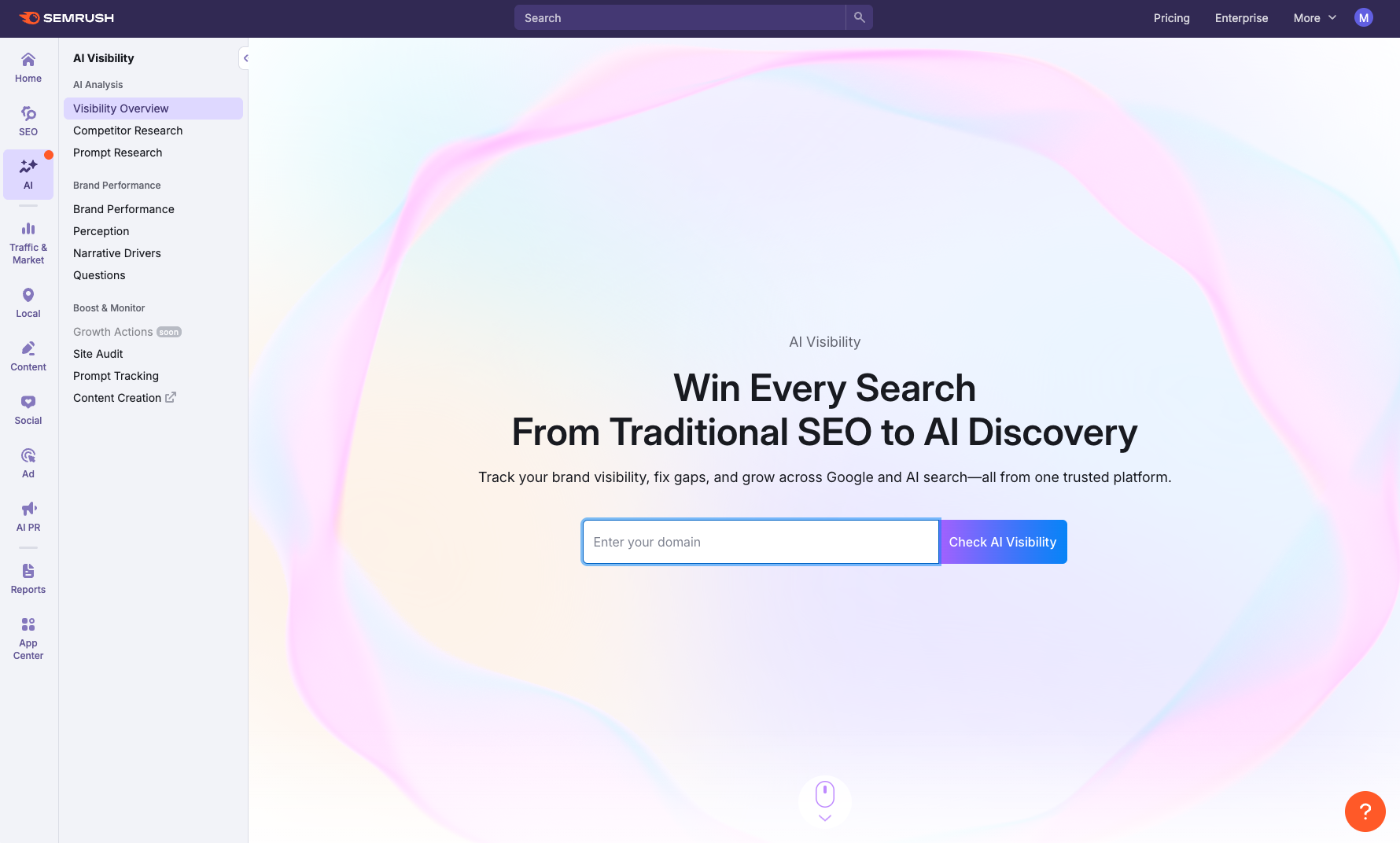
The Toolkit helps you understand how often your brand appears inside AI-generated answers and where you’re being outperformed by competitors. It’s useful for spotting gaps, improving AI crawlability and adapting to the shift from rankings to citations.
Key points:
- Great for founders who rely on organic visibility and want to track AI search presence
- Highlights where competitors appear in ChatGPT, Google AI Mode and Perplexity
- Strong technical audit for schema, internal links and structured data
- Prompt tracking is helpful but still limited
- Recommendations can feel generic rather than brand-specific
- Best value if you’re in a competitive niche and willing to act on the insights
Sound interesting? Then read my full review below
Updated:
November 24, 2025

By Max
Disclosure: Some links on this site are affiliate links. If you decide to make a purchase, I may receive a commission, which does not affect the price you pay.
If you’re like me (you run a business that can benefit from increased traffic) then it's likely that you'll be experiencing a shift in where people are discovering your business from. Previously, Google would be your core source, often your organic visibility and rankings in Google would have a big effect on your business, but the market has shifted in a massive way for the first time in decades thanks to AI.
The key shift is this. more users are not navigating the classic “10 blue links” layout of Google any more. Instead they’re getting answers directly from AI-powered search interfaces, so you need to make sure your business is adapting to this way too or you'll be left behind.
If you're thinking "Sounds good, I'll focus on that in the future" then you need to rethink that, according to McKinsey & Company, about 50% of Google searches already have AI summaries, and that figure is projected to reach 75% by 2028. That alone signals a change in how visibility is working, however other stats are saying that only around 1% of total web traffic is coming from AI however we also know that AI mentions may not be as trackable as a link on Google would be.
In short: If you are relying solely on “getting traffic from organic rankings in Google” you’re sleeping past the biggest shake-up yet.
So when Semrush launched this AI tool as a layer on top of their SEO platform my initial thoughts were “Okay, this could be the missing link between my content and the new visibility frontier.” I used it for a few weeks, tested it against other tools we've used and here’s what I found.
What the Toolkit offers (features)
In my experience the key features that will be used/valued by most founders are:
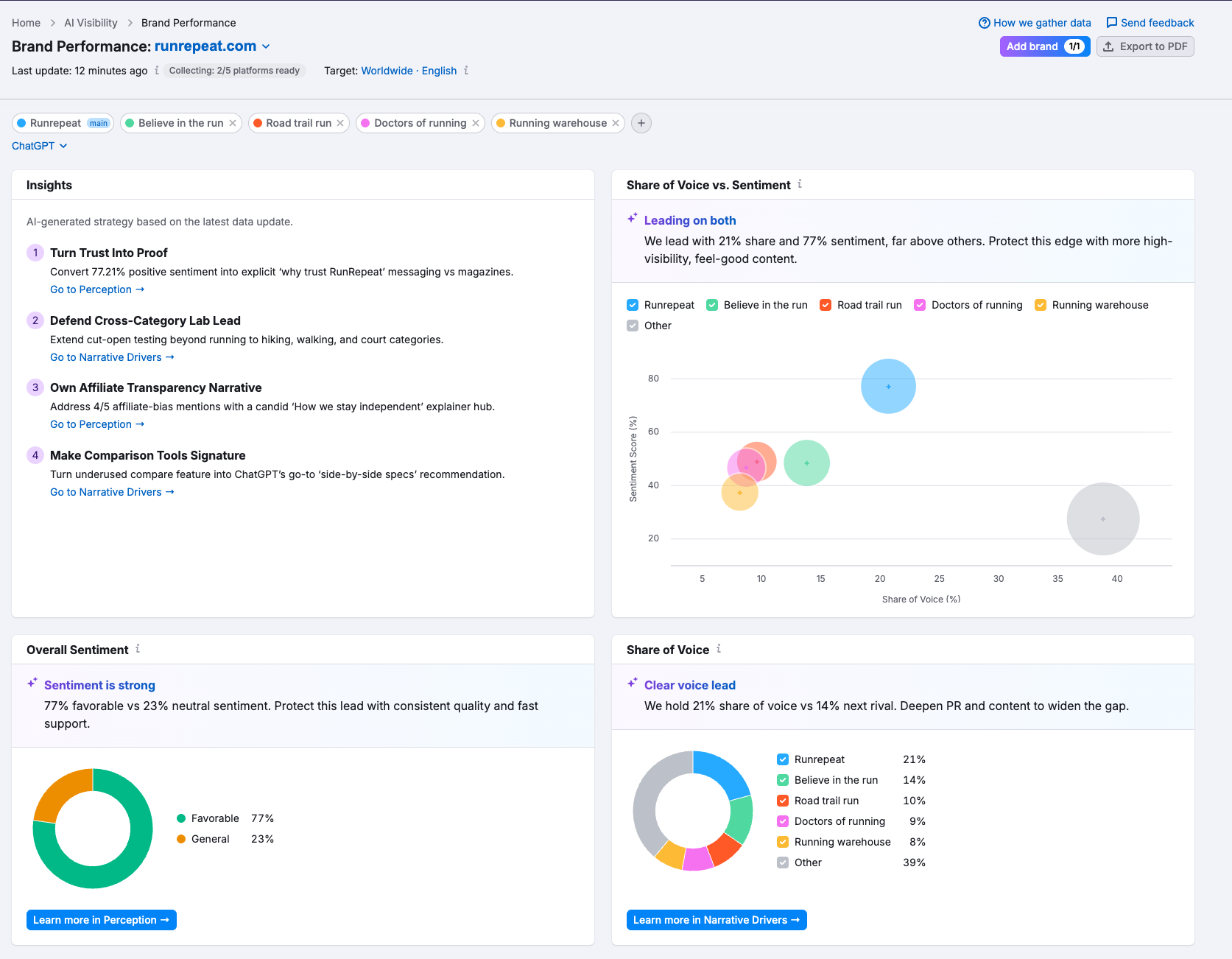
Note: We've used an example of RunRepeat (which as an avid runner, is one of my favourite sites to discover the best running shoes) they do an incredible job of reviewing and do well traditionally in organic search results. So it's interesting to see how they are doing in AI results.
Visibility overview
A dashboard that tells you how often your brand appears in AI-generated answers (across platforms such as ChatGPT, Google AI Mode / AI Overviews, and Perplexity).

As you can see, RunRepeat have a relative low score, one that is asking to be improved, so although they may have fantastic content, have traditionally done well in search, this tool has shown that they need to look into AI visibility and their approach to this area.
Brand performance
Sentiment, attributes, competitor comparisons. In other words, not just “do you show up” but “how are you described” and “who else shows up instead of you”. A little like if you owned a restaurant, you'd love to know how often you get brought up on conversation but the key part is when you do, is it positively, what do people recommend, which competitors do they also mention and why. This all helps you understand how you can improve and increase your presence.
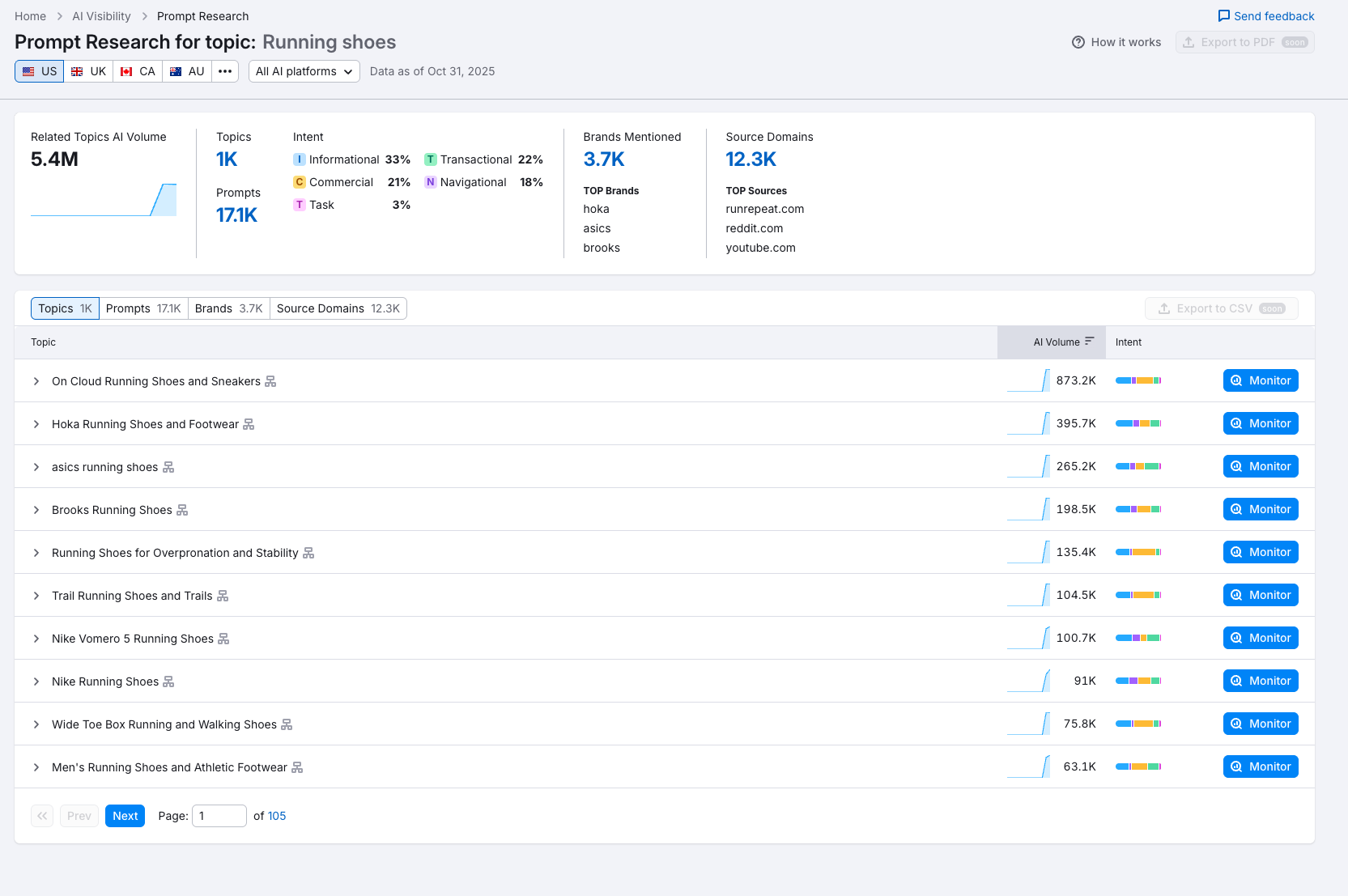
Prompt tracking & prompt research
You input the prompts/queries that matter to you (“best SaaS deals for startups”, “Slack alternative for SME”, etc) and the tool tracks which brands show up, your rivals, and the gaps.
AI crawlability/site audit
It checks your website from an “AI-visibility” point of view, for example, checking your schema markup, internal links, structured data, FAQ/How To blocks and more that help AI models extract your content.
Semrush’s own blog states that “community-generated content (Wikipedia, Reddit) consistently outranks official brand marketing in AI citations” so their audit includes checks that help you fix the “crawlability to AI” aspect. (source: Semrush)
What I liked (from running with it)
- The mindset shift - Using this tool forced me to ask myself a new set of questions, not just “What keyword am I ranking for?” but “Am I being cited by the AI when someone asks this question?” That is a subtle but in my eyes a very important shift: from rankings to citations. That aligns with more academic thinking of “Generative Engine Optimization (GEO)”. arXi
- Competitor visibility gap surfaced - For our FounderPass brand, we noticed that for certain prompts our visibility was essentially zero, yet competitor brands were showing up. Without the tool we wouldn’t have spotted this gap so clearly.
- Technical AI readiness audit is useful - Even for a moderately built site like ours, the audit flagged missing FAQ structured data, non-descriptive anchors, and internal linking issues that might hamper how AI engines “see” our content. Fixing those is low-hanging fruit.
- Good for benchmarking - It gives a sense of your brand versus competitors across platforms. For example, you can see your AI share of voice relative to rivals in ChatGPT vs Google AI Mode vs Perplexity. That comparative view is often missing in standard SEO tools.
What I didn’t like / limitations
- Scope of platforms & prompts is still modest - Some other reviewers of this tool point out (and I agree) that although Semrush markets the tool as covering ChatGPT, Google AI Mode/Gemini, Perplexity, the actual prompt-tracking is limited especially if you have many prompts to monitor. This is not a surprise as to how relatively new AI search monitoring is and I do feel this will improve with time.
- Methodology transparency is weak -The tool gives you an AI Visibility Score and “market share across prompts” but I found the explanation of how many queries, how they were chosen, which prompts were actually measured, etc a little lacking.
- Strategic recommendations are generic - The tool generates action-plan suggestions (e.g., “Expand your business line”, “Improve onboarding”, “Monitor feedback”). In my experience they often feel broad and could apply to many businesses, rather than being deeply tailored to your unique brand.
- Traffic and conversion impact still uncertain - While AI-search visibility is growing rapidly, the fact is that most referral traffic still comes from traditional organic search. For example, AI search referrals remain < 1 percent of traffic for many sites. So paying quite a price for a tool may make sense only if you believe the shift will accelerate for your niche, which I personally do for my area (SaaS/tech)
Which founders it's suitable for
Good fit:
- You run a brand or website that depends on organic visibility and authority, and you’re worried about the risk of being skipped by AI-powered search.
- You have multiple relevant prompts (e.g., “best X for startups”, “alternatives to Y”, “how to choose Z”) and want to monitor and optimise for these in the AI era.
- You are in a competitive niche where being the cited answer matters more than just ranking #1.
- You are willing to act: once you identify gaps (via audit, structured data fixes, prompt tracking) you commit to fix content, schema, internal linking etc.
Not such a good fit:
- You are a solo blogger or micro-site with minimal brand or few prompts you care about. The cost versus benefit might not stack.
- You rely mainly on traffic and conversions from traditional SEO and don’t (yet) believe that AI-search will materially shift your channel before 18–24 months.
- You want a fully prescriptive, highly-tailored action plan rather than dashboards and data; in that case you might need a bespoke service or tool.
My verdict: It's worth it for many
As with most tools, if it is worth paying for will depend on your business use cases, for us the answer is yes, it is worth it, but with conditions. Because we operate in the SaaS/tech niche, we believe the AI-search shift will accelerate. The toolkit gave us insight that we didn’t have before and surfaced real gaps (brand visible in traditional search but not in AI-search). It also helped us prioritise technical fixes that improve AI-crawlability.
However it is not a silver bullet, as its a paid tool, it means you must ensure you act on the insights. The data needs to translate into content/technical improvements, prompt-tracking strategy, structured data, link building with authoritative sources (since AI engines favour third-party authority).
If I were advising a smaller brand or micro-site, I might say: wait until you’ve got your content/SEO fundamentals nailed, then revisit tool when the budget and prompt-volume justify it.
In one sentence: If you treat the Semrush Toolkit as a strategic compass for the next wave of search visibility (rather than just another SEO tool), it’s a smart investment. But if you expect it to replace your SEO work or deliver results hands-free, you’ll likely be disappointed.
What I’d like to see improved
- Greater transparency around how the “AI Visibility Score” is calculated: number of queries, prompt selection, weighting.
- More prompt-tracking capacity / platforms at lower entry cost (especially for leaner brands).
- Deeper actionable recommendations tailored to niche/brand instead of generic ones.
- Integration with conversion/traffic tracking so you can correlate “AI visibility” → “actual traffic/impact”.
- Ability to export suggestions and integrate with your content workflow (e.g., Trello, Asana) so insights turn into action.
Final thoughts
We are in the early innings of AI-driven search, it's going to be moving at an incredible fast pace, the brands that figure out how to be trusted sources inside AI-answers are going to win the attention economy going forward. The toolkit from Semrush gives you a seat at that table and a means to track and act. But it’s not plug-and-play. You need to combine it with content strategy, technical execution and competitor awareness.
For FounderPass -a SaaS-deal platform with a growing brand and many relevant prompts - the toolkit is a useful investment. I’ll continue to monitor how our AI visibility evolves and will share results. If I see our AI share of voice climb (and tie that to traffic/conversions) I’ll feel confident that we’re ahead of the curve.
If you'd like to try the AI Toolkit yourself and see if it will be suitable for your business needs and if its worth paying for.
If you see a * next to a link it means we are affiliated with the company and therefore may make a small commission if you sign up, this does not affect our reviews or information provided, this simply helps us run FounderPass and help give you the best information possible.
Information we provide is for general information and does not constitute financial advice. Always ensure do your own research when making decisions especially financial ones.